Showing posts with label Technology. Show all posts

Will VR Technology Change Marketing Forever?

Marketers are looking at advancements in VR tech so they can further use this storytelling medium.

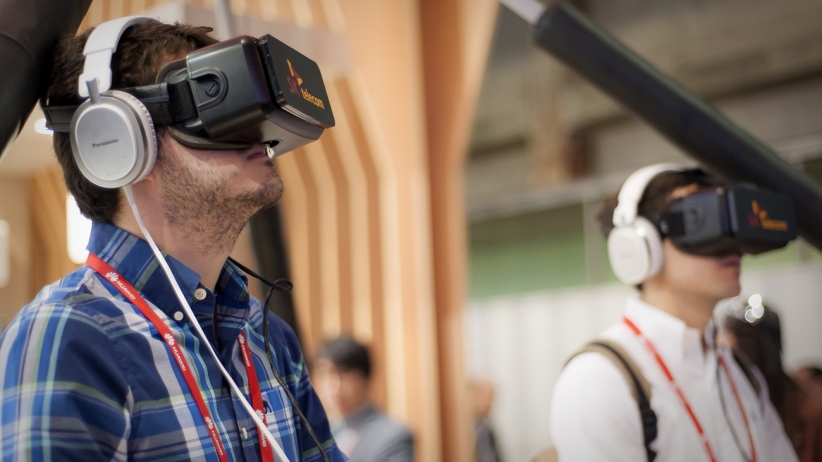
Virtual reality (VR) technology has been discussed and hinted at for years, but we’ve finally seen some significant progress made this year. And while there’s still a lot of ground to be made before it can be considered a mainstream technology, now’s the perfect time to take a look at the role of VR in business and how it will impact marketing, specifically.
What is VR?
“Virtual reality is the term used to describe a three-dimensional, computer generated environment which can be explored and interacted with by a person,” explains Virtual Reality Society. “That person becomes part of this virtual world or is immersed within this environment and whilst there, is able to manipulate objects or perform a series of actions.”

Thanks to consumer interest and new developments, the technology behind VR is becoming cheaper and more cost-effective. This is leading to enormous buzz and demand in the marketplace, as well as interest among businesses that want in on the action.
Why is VR so effective?
If you don’t have any experience with VR, then you’re probably wondering what all the fuss is about. If we had to break it down into four concise bullet points, it would go as follows:
  Novelty. For starters, VR has the “hip” factor. Its’ new, it’s cool and it’s something that’s never been seen before. That, in and of itself, creates an allure in the marketplace.
  Immersive. Over the years, media has become more and more immersive. From television and video games to social media and mobile devices, the more visually stimulating and engaging a technology is, the more effective it is.
  Memorable. Did you know that the human brain processes images an astounding 60,000-times faster than text? It would stand to reason, then, that VR experiences are even more memorable than images, which keeps people coming back for more.
  Story-based. Finally, VR is often rooted in storytelling. Anytime you have a visual medium that can be used for storytelling, you have a recipe for success.
VR technology is here to stay. From personal use to business applications, it’ll be exciting to see the advancements made in the coming months.

How is it being used?
As mentioned, the potential for leveraging VR technology in marketing is (pardon the pun) virtually unlimited. Let’s take a look at some of the uses:
  Incredible experiences. With VR, you can suddenly transport your customers to any scene in the world (or even your imagination). Marriott recently did this by partnering with Framestore VR Studio and Relevant to take customers on virtual tours of vacation destinations like Hawaii and London. It was a smashing success and shows just how powerful VR can be.
  Customer education.  What better way to teach customers about a certain topic than by actually involving them? This is what the Hacienda Patron tequila distillery recently did by giving customers a behind-the-scenes look at what goes on during the production process. As a result, customers felt a closer connection to the brand.
  Fresh innovation. While newspapers are quickly dying off, leading companies are looking for ways to stay relevant. The New York Times has done this by releasing a series of VR films to its subscribers this year.

The possibilities are endless and marketers are anticipating even more advancements in VR technology so that they can further utilize this powerful storytelling medium.
Putting it all together.
VR technology is exciting and promising, especially in the marketing industry. It has the potential to totally and utterly revolutionize the way in which markers engage customers, which will have a lasting impact on businesses everywhere. What do you think?

Written by: Samuel Edwards

Credit: Entrepreneur.com

What's Driving the Internet's 5 Hottest Trends

As the CTO of a marketing technology company, my main challenge is to keep up with rapid changes in technology and consumer behavior in order to create differentiated growth. In the last 10 years, mobile and social media have disrupted advertising, software and consumer electronics. Just like the rise of the PC and internet a decade before, these are foundational disruptions. Multiple groundbreaking technologies are looking to change how we interact with products, companies and each other, and they are being driven by a perfect storm of dependent innovation.

It's an exciting time, particularly in five key ways.

Selling stories and not products

Most early-stage sales teams lead with their products. They are typically so excited about their new products, that they get bogged down in selling the minutia of their product’s features and functionality. They think that is what their clients will care about, and that is what is going to drive a sale. A common rookie mistake. As clients don’t really care about you or your products (at this preliminary stage), they care about themselves, and how you are going to help them to solve their problems.

4 Tools That Can Help You Provide Better Tech Support to Your Customers

Customers are the lifeblood of any growing company. Their return business brings reliable income and their referrals help you widen your reach. According to the Adobe Digital Index Report, 40 percent of an American business's revenue comes from repeat or return buyers, who are only eight percent of a business's overall visitors. This means a small percentage of your customers are helping you pay the bills every month.
By nurturing that eight percent and hopefully watching your repeat customer base grow, you can keep your monthly cash flow strong. Fortunately, there are multiple tools you can use to better interact with your customers, while also keeping your response times short. Here are a few tools that are designed to support your customer service efforts.

Microsoft's Digital Transformation

This past year, I’ve been inspired by our customers, partners, government leaders and people driving change in their communities around the world.  Each of them are eager to renew growth and make a greater impact on society, but they’re faced with the realities of today’s markets and constraints. To move forward, businesses of all sizes, in every industry, are pursuing transformation with digital technology.

Why your company should consider outsourcing content creation

Add caption
Creating content is hard.
Many business and the CMOs who lead their marketing efforts struggle to consistently create high-quality content that engages their target audiences and achieves their organizational goals. But struggling with content doesn’t have to stop your team from creating and distributing it — or seeing substantial returns from it.

How would Steve Jobs improve Customer Experience


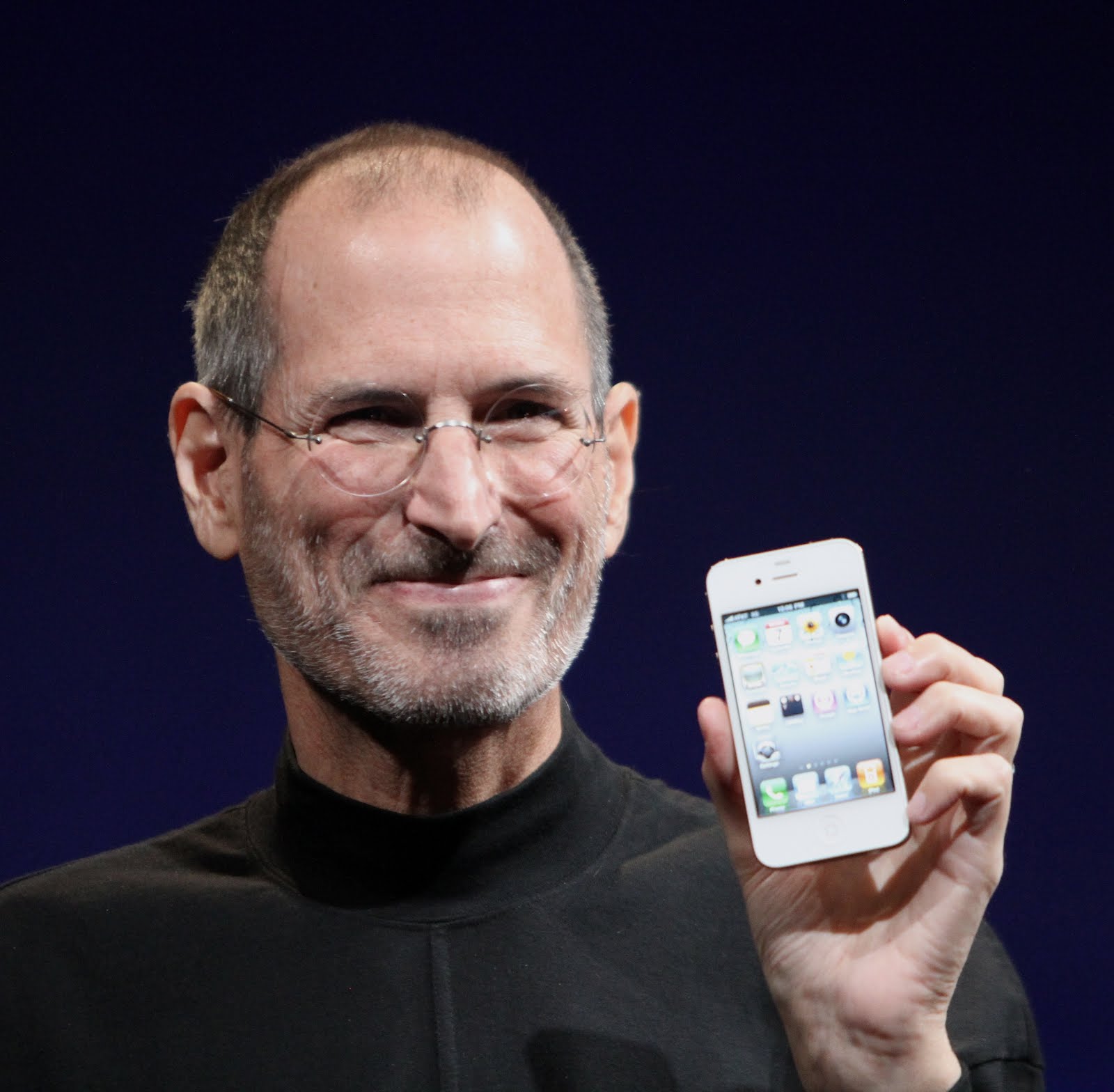
Steve Jobs was a true customer experience and user experience thought leader, wildly and repeatedly successful at transforming the customer experience for millions of customers worldwide, through Apple’s computers, mobile devices, the experience at the Apple Store, and in many other ways.

And his approach was based on a very simple message that he drilled into his team over and over and over: You've got to start with the customer experience and work back toward the technology--not the other way around.
In other words, the technology sold by Apple, or used by Apple in support of the customer experience, doesn’t have to be invented at Apple. And the technology Apple has lying around at its disposal doesn't have to end up being used.

Can technology save journalism?

Ten years ago, in a moment of characteristic prescience, the Economist asked, “Who Killed Newspapers?” The year was 2006, and already, the Internet posed an existential challenge to an industry that only several decades earlier seemed unassailable.  While the question was then, and remains, relevant to the broader world of journalism, the Economist observed that “of all the ‘old’ media, newspapers have the most to lose from the internet.”

How marketing technology enables brands to be more human

Automation in marketing can be a really great option for any business—as long as it’s implemented well. Freeing marketers from the more mundane and repetitive tasks that sometimes come along with the job, allows them more time to focus on the bigger picture. But don’t think you can “let the machines do the talking”—sloppy, boring or even “robotic” feeling marketing is rarely effective, especially in the modern digital era where speed and pin-pointed relevance are crucial to the survival of any kind of company. There’s simply no room for mediocrity when it comes to appealing to customers, and automating too much destroys the human engagement factor vital to a successful digital marketing strategy. 

The dangers of texting & driving

Image credit: www.larichesubaru.net
The proliferation of mobile applications has brought some adverse effects on people and the society, especially those who drive. The popularity of mobile devices has some unintended and even dangerous consequences. Mobile communications are linked to a significant increase in distracted driving, resulting in injury and loss of life. Texting while driving has become the number one driving distraction for many people. Drivers need to be aware of the dangers and keep their attention on the road, and not on their cell phones or other mobile devices.    

Is the desktop PC on its way to extinction?

The introduction of laptops, followed by smart phones, net books and now tablets, seems to have started the debate on whether or not the desktop PC is on its way to extinction. Without a doubt, mobile phones and tablets are becoming smarter and they have enough computing power as previous computers which occupied large spaces. But can we say that the desktop PC is on its way out?
I remember, recently, when two of my children were about to start university, both requested for computers to assist in their school work. My first instinct was that they would want laptops but to my surprise, one of them insisted on a desktop PC. I was surprised because I thought it was all about portability and the ability to go mobile. But I guess I did not have the whole story. My son outlined his reasons for the desktop PC. He "wanted to use it for gaming and most laptops and other devices did not have the required specifications." Secondly, the performance and life expectancy of the desktop outweighs that of the laptop. Thirdly, it is easier to upgrade parts of the system unit of a desktop. Finally, he indicated that he worked better in a fixed position with the mouse and keyboard which the desktop had. He had made points which sounded cogent but is this the whole story?

The fossilizing age of print media


I heard a rumour some time back that with the advent of social media, print media was heading for the gallows. As to who propagated this rumour, I cannot tell, but there is this fear that print media will be going into extinction soon. Well, with the ever increasing advancement of technology and the need for things to be done quickly and now; it will not be entirely hazardous to project the irrelevance of print media in the not so distant future.

Our Love/Hate relationship with technology

As someone would say, “We are all prisoners of our own devices.”  This holds true depending on where you stand and your competencies. Well, I am speaking with regards to technology. Buying the latest gadget, using the latest app, or switching to mobile banking is thrilling for some, but terrifying for others. This is quite understandable, considering the fact that as at 2010, only 10% of the Ghanaian population had computers, 4% had access to the internet and 72% owned mobile phones.  The Ghanaian is relatively slow when it comes to the adoption and usage of technology.  Marketers need to understand what motivates or inhibits the use of technology and capitalize on it. 

5 Top Technology Trends that will Disappear in the Next 5 years


Dinosaurs are extinct and don’t we just miss them? We have to go all the way to the museum just to look at their bones. Let’s fast forward to five years from now and we have nostalgia for office fax machines. Surprised? Well it’s true. A recent survey was conducted by LinkedIn, a social media platform for people in professional occupations, where over 7,000 global professionals in 10 countries were questioned. The results of this survey have suggested that by the year 2017, most of the office trends we are so painfully used to will be no more. Like that saying goes, “Out with the old and in with the new.”

Labels

Recent Posts

Facebook